

With youth baseball season about to begin, I wanted to share some thoughts on my own experiences with youth sports as a kid and the lasting impact it left on me.
My father has been involved in sports for more than 70 years and, at 84, still coaches and plays senior softball back in Penn Hills, Pa. “The Belly Man,” as he was known to all the players he coached, has always preached about the lifelong benefits of playing sports.
In 2004 he bought me Brian Kilmeade’s book, ‘The Games Do Count – America’s Best and Brightest on the Power of Sports”. It is a great read for even the casual sports fan and is as much a book about leadership as it is a sports book. Kilmeade interviews more than 70 politicians, movie and TV stars, musicians, successful business owners and CEOs of major companies about the life lessons they learned from participating in youth sports.
So I was inspired to write this column when the son of a great friend and former hockey, baseball and football teammate, Don Studebaker, reached out to see if he could interview me for a school project.
So here are some excerpts from the interview with Tim Studebaker, a student at George Mason University, for a sport administration project.
What sports did you grow up playing?
Started organized baseball at age 6, youth football at age 9, hockey and basketball at 10, golf and tennis at 13, and ran cross country in 10th grade (one year was enough!)
How did sports affect your childhood?
It kept me active and out of trouble (for the most part!), taught me sportsmanship, how to get knocked down but to get back up. It taught me about how to be a teammate, and about leadership, but most of all it was having fun with some of the best friends I ever had (and still have). I credit the friendships I developed through sports with your dad (Don Studebaker), Clark Dexter and Lou Longo for saving me from a path that could have been disastrous given the era and where I grew up. There were many distractions and temptations that ruined many of our friends and classmates’ futures.
What was it like playing high school sports?
At first it was hard trying to balance more than one sport with school and also hanging out with friends. I gave up football because of my size and turned my attention to hockey and baseball. I gave cross-country a try in 10th grade and can say it was the most grueling physical and mental sport I ever tried. After 10th grade I concentrated solely on hockey in high school but also started playing a lot of golf and tennis.
How did you get into college sports?
I was really naive thinking that because I was a pretty good high school hockey player in Pittsburgh, that I was good enough to play at one of the top college hockey programs. Big wake-up call when I visited Boston University, the University of Denver, and Notre Dame. I was convinced I was getting into Notre Dame and was going to play as a ‘recruited walk-on.” Thankfully my mother made me apply to Pitt and Penn State as a backup. I had heard rumblings that PSU was building a new ice rink and was going to go varsity — and had a pretty good engineering program too — so I decided to be a Nittany Lion. I was very lucky that I ended up at Penn State, mostly by sheer accident.
What was it like playing hockey at Penn State?
My first two years were incredibly tough as the new rink construction was put on hold due to the economy but after they already demolished the old existing Ice Pavilion. We practiced on a temporary outdoor rink off Hastings Road that was built over tennis courts, or took vans to Johnstown or Mechanicsburg — both two hours away. We played our “home” games at the Mechanicsburg Skatium near Harrisburg in front of very few fans. Those two years were two of the most fun seasons of hockey I ever had. You make a lot of great friends spending that much time on the road together.
Despite our circumstances, we won back-to-back Mid-Atlantic Conference Championships. The new Greenberg Ice Pavilion opened my junior year (1981) to loud, often standing room only crowds of 1,300-1,400 in a rink that seated 1,075. Getting to practice in our own rink, with our own locker room was paradise compared to the first two years. My senior year we finished 3rd at the National Tournament in Boulder, Colorado. The lessons learned and the friendships made were the best part once again. Getting to be team captain my senior year was especially rewarding.
Was it difficult balancing schoolwork and sports?
I struggled through the first two years partly because of immaturity, partly because I focused too much on hockey and having fun, and because I was in way over my head in nuclear engineering. The best decision I made was switching into the business school, which is where I should have been all along.
I was blessed to have an academic advisor in Dr. David Wilson, who, as chance would have it, was originally from Toronto and loved hockey. He helped me get my act together and I ended up becoming the vice president of Omicron Delta Kappa leadership honor society, president of the Hockey Management Association and a Lion Ambassador, all of which served me well long after school both with networking and what I learned about leadership.
After playing college sports, how have sports impacted your life?
My whole life revolved around sports from a young age. It really taught me about mental toughness, perseverance, teamwork and leadership.It also kept me in shape. Unfortunately I got hurt — a lot — because I wasn’t always the smartest athlete. Reckless abandon was a term I heard a lot. I also didn’t spend enough time in the weight room getting stronger. Many broken bones, concussions and two nose surgeries have me hobbling around as a 55 year old. But I wouldn’t trade it for anything. I made great memories, great accomplishments, great friends — and I met my future wife, who was a volunteer for the Hockey Management Association when I played.
After seeing how your sport career has turned out, is there anything you would have done differently?
I try not to have regrets but I sure would have worked out harder in the weight room, eaten better and skipped more parties. I also would have liked to do a gap year where I either played post-grad prep school hockey or a year of junior “A,” not just to mature as a player, but more importantly because I was not ready for college at 18 nor did I really know what I wanted to do.
I consider myself very lucky to have had the opportunity to play a variety of sports and proud to say my best friends are still the guys I played with either in high school or college.
More Columns
View all Columns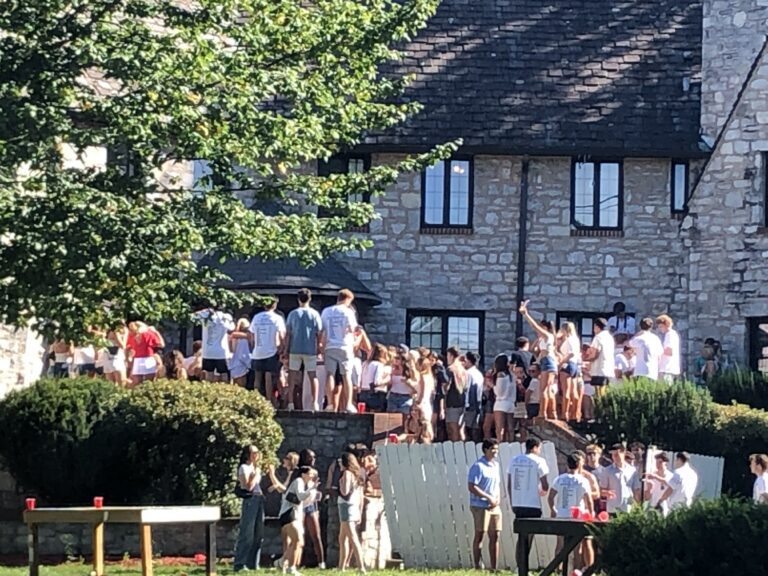
Greek Life at Penn State: Plus Ça Change
It was back to business as usual among the Woo people last weekend, which meant very loud outdoor parties, very many shirtless young males and very many young females wearing […]
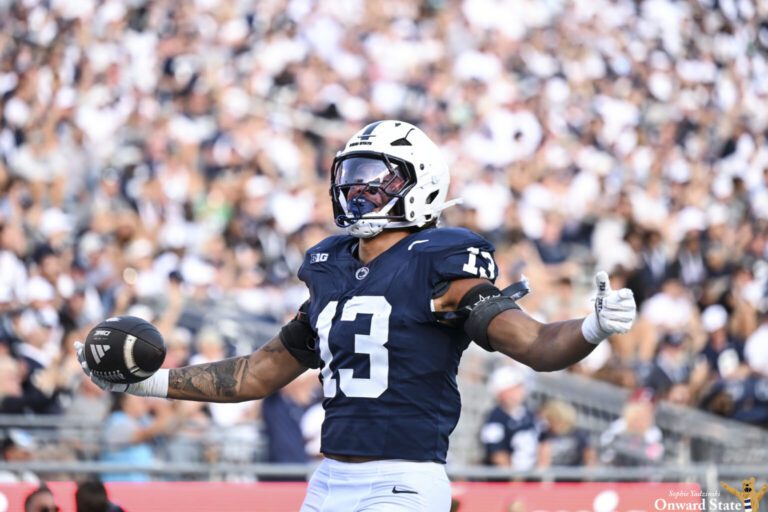
It’s Time to Watch Penn State Linebacker Tony Rojas… Again
Watch Tony Rojas. He’ll be back at linebacker for Penn State on Saturday against Marshall, the culmination of a journey that seemingly took him everywhere, but ultimately brought him back […]
Hook: Weather Wonders and School Stress
Six days a week, my wife and I like to get out for a walk around the neighborhood. We skip Sunday – a day of rest and all – but […]


