

With a 7-1 vote, the State College Area school board put its support Monday behind prevailing-wage reform in Harrisburg.
State lawmakers are debating House Bill 1329, which would raise the threshold at which contractors must pay prevailing-wage labor rates for state-funded improvement projects.
Right now, state-funded entities — school districts, municipal governments, state agencies and others — must see that contractors pay prevailing wages for any capital project valued at $25,000 or more. The rule, created in 1961, was meant to protect Pennsylvania communities from out-of-state contractors who might undercut local businesses’ labor expenses — and, in turn, local workers.
But critics have said the law has become outdated, saddling contractors with excessive regulations and taxpayers with excessive expenses. The $25,000 threshold hasn’t been adjusted in five decades. And prevailing-wage rates, established by the Department of Labor and Industry, can exceed a region’s typical market-driven rates by 30 percent to 75 percent, Tom Songer said Monday.
He owns The Torron Group, a State College-based developer and engineering firm. He and Steve Balkey, of Ameron Construction Co. in State College, urged the school board Monday night to support prevailing-wage reform. The bill now circulating in Harrisburg would raise to $185,000 the project threshold at which contractors must pay prevailing wages for state-funded capital improvements.
‘We as taxpayers want a quality job for the best price,’ Songer said. He said the prevailing-wage mandate doesn’t deliver better buildings — just more-expensive buildings.
The prevailing-wage standard typically adds about 20 percent to a construction project’s overall price, he said. For some types of local labor, he said, the prevailing-wage requirement can mean the difference between hourly wage-and-benefit expenses in the $30 range and those in the $50 range.
In addition, Balkey said, the administrative work involved in complying with the mandate can be substantial — and discourage smaller, local businesses from bidding on some public projects.
‘It’s antiquated,’ Balkey said of the current law.
With its resolution supporting the proposed reform, the State College school board noted its district is facing ‘reductions in education funding, slower local revenue growth and increasing pension costs.’ Mandates such as the prevailing-wage standard ‘limit our district’s ability to direct limited resources to our classrooms, where they are needed most.’
The full text of the board resolution is available via the school-district website.
Board member Laurel Zydney cast the sole dissenting vote, having expressed concern with what she said appears as partisan language in the resolution. Gowen Roper was absent.
Ann McGlaughlin, the board president, said the board has a duty to advocate for the best interests of the school system. And in the end, she said, eased prices for capital projects should help ease taxpayers’ burden, too.
More Local News
View all Local News
Judge Orders Sandusky Hearing to Proceed After Motion to Cancel
A judge has denied Jerry Sandusky’s request to cancel an upcoming hearing for a claim that one of his accusers is recanting his allegations of sexual abuse by the former […]

Still No Deal Between Mount Nittany Medical Center, Union After Latest Negotiations
Mount Nittany Medical Center executives and the union representing 950 of the hospital’s workers once again were unable to come to terms on a new contract after the latest round […]
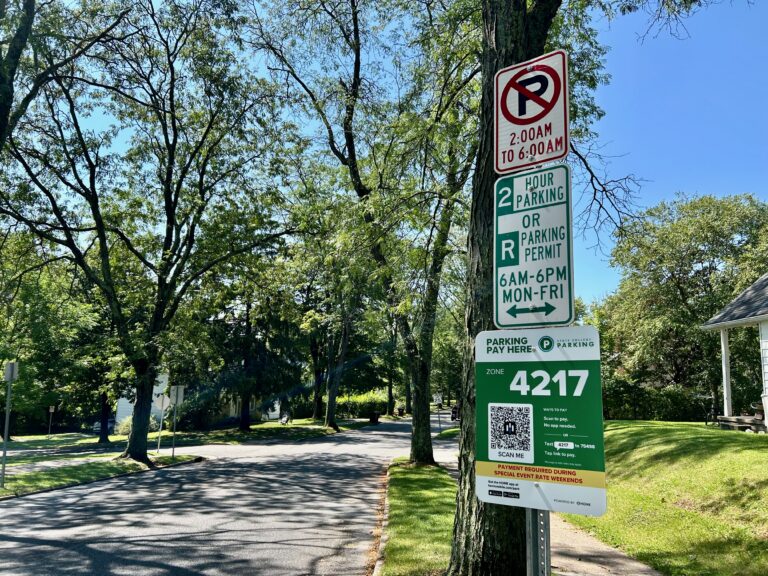
State College Set to Begin Charging for Parking on Residential Streets During Penn State Football Weekends
Visitors accustomed to free parking on streets in State College’s residential neighborhoods during Penn State football weekends are in for a change this season. The borough will no longer lift […]


