

This week I spoke to the Penn State Alumni Association New York City Chapter and touched on a number of themes. Among them was a concept of Journalism and Media and the idea of Due Process versus Don’t Process. He is an excerpt:
We live in a world where we constantly bow to the tyranny of social media outrage. Facts and due process are the victims of our brave new world. A couple of weeks ago CBS journalist Scott Pelly spoke at Quinnipiac College in a speech called “Our House Is on Fire”
The house he was talking about was journalism.
Now keep in mind — and I cannot stress this enough — there is a difference between journalism and media.
Media has become a commercial enterprise seeking financial returns for shareholders. Because its goal is not to seek the truth, perhaps it should not be fully protected by the First Amendment. Its goal is simply to find the story, regardless of accuracy, that returns the most ratings or page views. Media has become enslaved to our society’s worst impulses.
Journalism is another matter altogether. It is inspired by only one goal — the truth.
Today it’s a constant tug of war: journalism vs. media, trial by judicial system vs. trial in the court of public opinion … It is the right to due process vs. the stampede of don’t process.
Due process vs. don’t process — it is the struggle of our times and we’ve reached a defining moment.
Due process is a deliberate careful study of facts. It willingly accepts evidence that runs counter to our biases. It takes time and seeks only the truth for truth’s sake and not for personal agendas.
In the United States, a reality TV-, social media-, #LookAtMe-obsessed nation with an impatient demand for the latest information, we are becoming less informed, a country of don’t process.
Don’t process is like heroin — cheap, popular and highly addictive.
Don’t process is an immediate knee-jerk reaction to and acceptance of the most sensational accusations leveled against those we dislike.
Don’t process is a personal agenda seeking to create our own sets of facts.
Don’t process is opinion writers armed with keypads and smartphones handing out virtual pitchforks and torches to a social media mob demanding immediate reactions to every perceived injustice or slight.
Don’t process never considers whether what is said or printed is accurate or fair.
Don’t process presents inaccuracies or lies creating lasting fallout on the lives and reputations of real people and institutions.
The difference between “due process” and “don’t process” can best be described by two ideas. One journalist is asked what drives them and responds by talking about the truth. Another reporter, a Pulitzer Prize-winning Penn State alumna, responded by saying “moving the story forward.”
For-profit media must create a lucrative product factory assembly line of “content” for the unending 24/7 news cycle, so quality is compromised. Damage is done to lives, to reputations and can never be completely undone. That is what don’t process does.
The dream of a nation of due process is why the founders of this country crossed dangerous oceans to an unknown future. They founded a society that would respect the rights of every individual to a presumption of innocence in the face of demands for vigilante retribution.
One of our nation’s founders, John Adams, successfully defended British soldiers accused of wrongdoing in the Boston Massacre. For Adams, the courage of his convictions and loyalty to due process drove him to what was right over what was popular.
Due process became the cornerstone of a uniquely American life and existence.
We as Penn Staters ask for nothing more than due process and repeatedly get attacked. We know what our school has always been about. We know all too well that misrepresentations have taken root in many minds.
Just last week law professor and Penn State alum Marci Hamilton’s blog was reposted by the Huffington Post reporting allegations against Penn State and Joe Paterno as fact. Allegations that have never been proven and, in fact, are known to be false.
Here was a law school professor robbing others of due process and the presumption of innocence.
Worse still was that she presented her “objective” opinion piece without ever disclosing that she had represented two claimants against Penn State. That shows a complete lack of journalistic integrity. And I know what you’re thinking — there is no such thing as journalistic integrity.
Again don’t confuse media with journalism. Journalism has a code of ethics that many journalists follow. I know a good number of them. As we do not wish to be blamed for the actions of others, we, too, should not blame all journalists for the careless actions of media-types.
In 2016 look where we are now as citizens, as a society and an electorate. We must remind ourselves of the words of Thomas Jefferson “If a nation expects to be ignorant and free in a state of civilization, it expects what never was and never will be.”
We should challenge ourselves to be truly informed. To make good decisions as citizens we must demand journalism, truth and due process. Only then can we hope to remain free in the state of civilization that we’ve been entrusted to uphold across centuries.
More Columns
View all Columns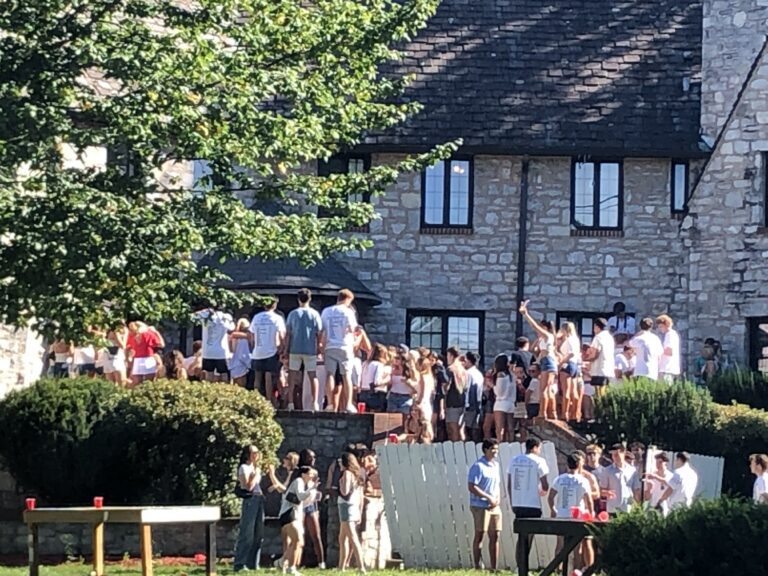
Greek Life at Penn State: Plus Ça Change
It was back to business as usual among the Woo people last weekend, which meant very loud outdoor parties, very many shirtless young males and very many young females wearing […]

It’s Time to Watch Penn State Linebacker Tony Rojas… Again
Watch Tony Rojas. He’ll be back at linebacker for Penn State on Saturday against Marshall, the culmination of a journey that seemingly took him everywhere, but ultimately brought him back […]

Hook: Weather Wonders and School Stress
Six days a week, my wife and I like to get out for a walk around the neighborhood. We skip Sunday – a day of rest and all – but […]


