

Humans in general find many things to worry about in their lives. Young people, especially, find things to worry about that gain outsize importance as they make their way through each day — things like fitting in, what their peers think about them, grades, family issues, the future, finding a partner and getting a good job. And one additional momentous thing that plays a part in the angst of many young people is creating an unintended pregnancy.
One personification of the level to which this angst can ascend was stated by Sandra Bullock’s character in the movie “The Blind Side,” when she is advising the actor portraying future NFL lineman Michael Oher on his first days in college. “Michael,” she says, “I want you to have a good time, but if you get a girl pregnant out of wedlock, I will crawl into the car, drive up to Oxford and cut off your penis.”
And that’s the way the topic of unintended pregnancy tends to be portrayed not only in movies, but in most of life – in educational, family and social settings. That getting pregnant is easy and you must take precautions to ensure it doesn’t happen. Of course, once you find a life partner, someone you love and who loves you, and you want to create the most special thing two people can create – a baby – then getting pregnant is a joyous occasion and a time to celebrate.
Except, what if you spend those years in angst of an unintended pregnancy, but when the time arrives and you are ready to create that oh-so-easy-to-do baby, it turns out it’s not so easy to have a baby, or to have a baby that grows into a child and beyond. You might feel a number of emotions, not the least of which is that you’ve been lied to by everyone.
According to the Centers for Disease Control and Prevention (CDC) there were 3.75 million births in the United States in 2019. That’s a lot of very happy parents.
However, the American College of Obstetricians and Gynecologists estimates that in the U.S. up to 10% of clinically recognized pregnancies end in miscarriage (pregnancy loss before the 20th week of pregnancy) every year. That’s 400,000 miscarriages a year. Add to that the 24,000 stillbirths (a pregnancy loss at the 20th week of pregnancy or later) that occur annually in this country according to the CDC and the 21,000 infants who die (Infant mortality is the death of an infant before their first birthday). Lastly, add in the unknown thousands of ectopic pregnancies (the implantation of a fertilized egg outside the uterus and a cause of maternal death in the U.S.) which are considered neither miscarriages or stillbirths and are not tracked. That’s over 450,000 very sad parents every year in this country.
To add insult to injury, no one talks about these pregnancy and infant losses. Most parents who find themselves in the extremely painful situation of having lost a pregnancy or infant only discover the very large fraternity of which they have sadly become a part after it happens. 450,000 losses a year in this country and the result is mostly silence. And this is a worldwide issue. The World Health Organization (WHO) creates resources promoting “why we need to talk about losing a baby” because “losing a baby in pregnancy through miscarriage or stillbirth is still a taboo subject worldwide, linked to stigma and shame.”
Unfortunately, my wife and I found ourselves members of this large kinship of people with pregnancy and infant loss. Five ectopic pregnancies and a miscarriage over the course of several years meant that the normal thrilling joy and excitement many people feel when discovering they are pregnant became a silent torment for us. You couldn’t celebrate the possibility of a baby and you certainly couldn’t tell anyone else about it because you didn’t want to have to later impart the sad news of loss. While we were going through our personal nightmare, similar experiences were befalling hundreds of thousands of other would-be parents, and over time that turns into millions of Americans who have suffered the pain of pregnancy and infant loss.
This was the reason back in 1988 that President Ronald Reagan issued Proclamation 5890 and proclaimed October as Pregnancy and Infant Loss Awareness Month, calling upon Americans to observe the month with appropriate programs, ceremonies and activities.
Specifically, the Proclamation states:
Each year, approximately a million pregnancies in the United States end in miscarriage, stillbirth, or the death of the newborn child. National observance of Pregnancy and Infant Loss Awareness Month, 1988, offers us the opportunity to increase our understanding of the great tragedy involved in the deaths of unborn and newborn babies. It also enables us to consider how, as individuals and communities, we can meet the needs of bereaved parents and family members and work to prevent causes of these problems.
The last sentence in that paragraph, meeting the needs of bereaved parents and family members, is an extremely important part of dealing with these losses. My wife and I were lucky to have found a support group in Orlando that allowed us to tackle the many deeply personal emotional thoughts that accompanied this distress. Our experience with that support group was so life changing that my wife and several other women offer a similar support group here in Happy Valley called HEART – Helping Empty Arms Recover Together.
On a global level the WHO offers some wonderful general guidance on the topic of meeting the needs of bereaved parents, probably the most helpful of which is for everyone other than the bereaved parents. They write:
It can be difficult to know what to say when someone you know loses a baby in pregnancy, but sensitivity and empathy can provide support and allow space for people to talk about how they feel:
Rather than saying “Everything happens for a reason, this wasn’t meant to be”, try saying something like “I’m so sorry. I can imagine this is very sad for you.”
Rather than saying “At least you know you can get pregnant”, try just to listen. You may ask “How are you?”
Rather than saying “At least you have a healthy child already”, perhaps say “I’m deeply sorry for your loss”.
Locally, we have a great opportunity to honor Pregnancy and Infant Loss Awareness Month. At 6 p.m. on Wednesday, members of our Happy Valley community will gather at the Footprints in the Field Garden at Calvary Harvest Fields, 150 Harvest Fields Drive, in Boalsburg. The Footprints in the Field Garden is a beautiful community memorial garden dedicated to families and individuals who have experienced pregnancy and early infant loss. The Garden is situated near two ponds on the property and will ultimately be landscaped with river rocks which can be inscribed to honor a lost baby and placed in the Garden.
Everyone is welcome to join this chance to, as President Reagan said, “meet the needs of bereaved parents and family members.” If you would like more information about the Garden and its mission, visit the Garden’s website at: https://footprintsinthefield.org/.
More Local News
View all Local News
Still No Deal Between Mount Nittany Medical Center, Union After Latest Negotiations
Mount Nittany Medical Center executives and the union representing 950 of the hospital’s workers once again were unable to come to terms on a new contract after the latest round […]
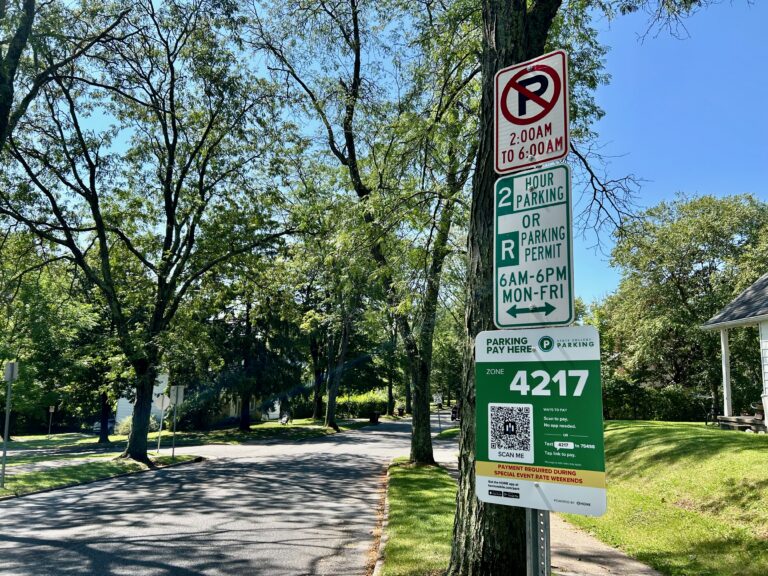
State College Set to Begin Charging for Parking on Residential Streets During Penn State Football Weekends
Visitors accustomed to free parking on streets in State College’s residential neighborhoods during Penn State football weekends are in for a change this season.Stories You MissedJudge Orders Sandusky Hearing to […]
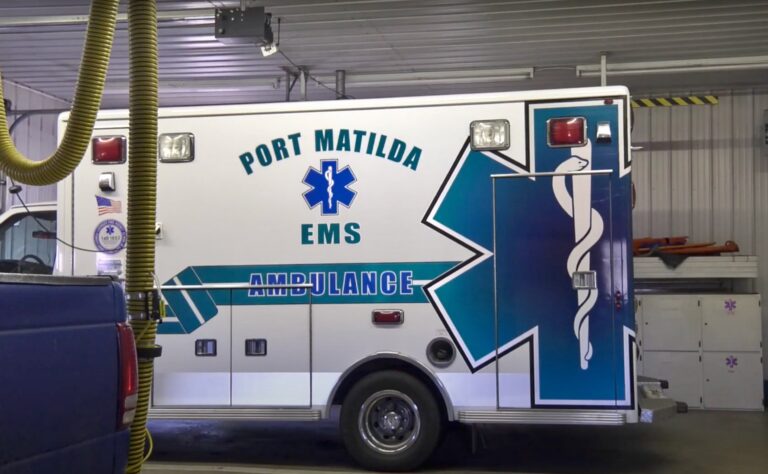
Ferguson Township Supervisors Weigh Increased Funding for Emergency Services
Ferguson Township supervisors are considering increasing financial support for several emergency service organizations after a discussion about the continuing financial challenges facing EMS providers.


