

JACKSON TOWNSHIP — This time of year brings on an American rite of spring — the opening of baseball season, when teams from Little League, high school, college and the pros take to the field to delight fans of the national pastime.
The game’s long and colorful history goes back at least to the early 1800s, and some say even the late 1700s. It is believed by historians that American baseball evolved from an English game known variously as base, base ball or rounders. And, yes, base ball was two words in the game’s early years.
There is a group of folks who are keeping the history and customs of the game’s early years alive by hosting a vintage baseball game each year at Greenwood Furnace State Park in Huntingdon County. It’s a pickup game for anyone who wants to play, and the game is played by rules from circa 1868. This year’s game, held on April 8, was hosted and promoted by students of Penn State’s Department of Recreation, Park and Tourism Management events planning class.
Greenwood Furnace cultural educator Paul Fagley acted as judge (umpire) for the games, clad in 1860s garb, including a long black coat and an Abe Lincoln-like stovepipe hat.
‘We play by the rules and customs of the late 1860s, just before the first professional teams,” he said. “One big difference people notice is that the vintage game plays faster and more dynamically than today’s game. It was the live ball era, as the ball was in play almost all the time.”
The ball itself was different too — a bit larger, softer and stitched differently than modern baseballs.
The rules and terminology of vintage baseball are interesting, and some border on the bizarre by today’s standards.
The hurler (pitcher) threw underhand pitches to the striker (batter) from his mound just 45 feet from home plate — 15 feet, 6 inches, less than today. The object was not to strike the batter out, but rather to deliver pitches that could easily be hit, thereby focusing the game on base running and fielding. Three strikes still got you out at the old ball game, but there were no called strikes. The striker had to actually swing at balls in the strike zone and miss, and foul balls were not considered strikes. Overrunning first base was not permitted.
When a high fly ball, called a skyscraper, was hit, the fielders could catch it either on the fly or on the first bounce for an out. If the ball was caught on the bounce, runners could still advance until they were tagged out.
Catches were made bare-handed, as mitts had not yet been invented. Ground balls were called daisy cutters, and a low fly ball was a daisy fly.
The shortstop was called a roaming infielder.
Scoring a run was called an ace, and after a striker stepped on home plate, which was made of cast iron, he had to ring a bell a few feet away, and yell “Tally me an ace!” He could still be tagged out between home plate and the bell.
Runners didn’t get hurt sliding into the iron plate because sliding was not allowed. Arguing with the judge was called chafing, but the judge’s decisions were final.
Games in those days were not limited to nine innings. The game ended when one team scored 21 aces. “The teams got so good at fielding that games sometimes went on for days,” said Fagley. The Greenwood Furnace game went on for about four innings, as most of the runners scored many aces, cheered on by a small crowd of spectators.
Fagley commented on the huge appeal of baseball at all levels over its long history. “The game was so simple to play,” he said. “All you needed to play was a ball, a bat and an open field.”
The old ball game was quite different 150 years ago, but its descendent, modern baseball, still retains its mass appeal to today’s citizens, bringing to mind the words of singer John Fogerty: “Oh, put me in, Coach — I’m ready to play today.”
More Community
View all Community
Music for a Mission: State College Food Bank Celebrates Community Support With Fight to End Hunger Concert
The State College Food Bank is hosting the second annual Great Big Fight to End Hunger Concert at the State Theatre on Sept. 14, featuring the Grammy Award-winning band A Great Big World.
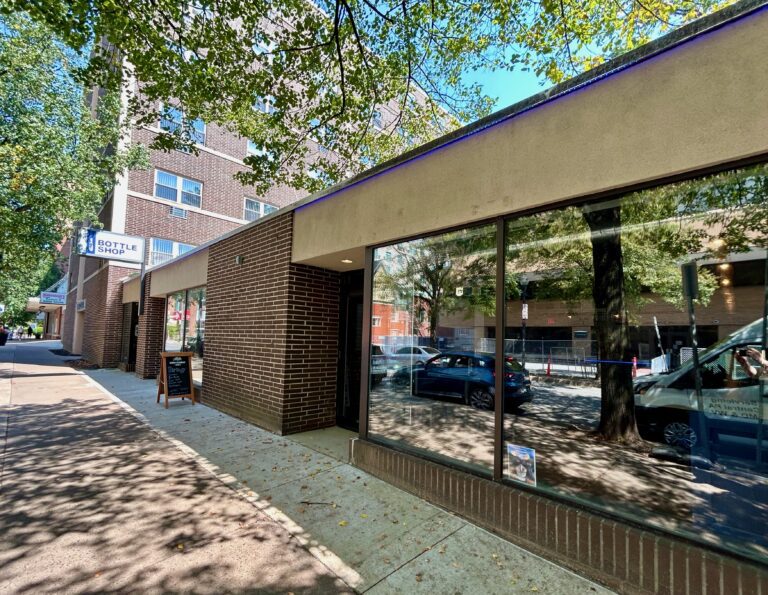
Bottle Shop Expands With New Blue & White Pub in Downtown State College
What began as a plan to purchase and renovate a longtime West Beaver Avenue bottle shop has grown into a new pub six years later.Stories You MissedNew Multi-Roaster Coffee Shop […]

E.F. ‘Pat’ Houser Golf Tournament Raises $62K for Skills of Central PA
The 21st Annual E.F. “Pat” Houser Golf Tournament, hosted by Skills of Central PA and the Skills Foundation, raised more than $62,000 on Aug. 24 at Toftrees Resort.Stories You MissedNew […]


