

SPRING MILLS — Nearly 400 middle and high school technology education students from five central Pennsylvania counties attended the Pennsylvania Technology Student Association’s regional conference, held Feb. 13 at Penns Valley High School.
The students spent the day competing in 60 different technology and leadership categories, including agriculture and biotechnology, communications, structural design, photographic technology, system controls, computer-aided drafting, engineering design, fashion design, dragster design, environmental focus, flight endurance, medical technology and others.
The school gymnasium was headquarters for three interesting and popular events, including the
catapult design competition, where student teams designed and constructed rubber band- or bungee-powered catapults. The catapults, made from PVC pipe and varying widely in design, then launched plastic golf balls aimed at a target net located 15 feet away.
“(The participants) get a five-minute practice session to calibrate their machines, then they have one minute to shoot as many balls as possible,” said TSA judge Josh Satteson. Points were scored for accuracy and for the design of the catapults. Spectators cheered when bull’s-eyes were scored.
Occupying half the gym was the dragster racing event. The dragsters are carved wooden cars, each about a foot long, fitted with a capsule of compressed carbon dioxide gas at the rear. A computer-controlled mechanism punctures the capsules, allowing the gas to escape and essentially making a rocket engine.
TSA official Ryan Ferry said the dragsters travel 20 meters (65.62 feet) down the gym floor, guided by a string threaded through tiny eye bolts on the underside of the cars. The cars, with creative designs emphasizing streamlining, typically made their runs in less than two seconds. Each heat consist of two runs, with the cars switching lanes between runs. The computer, coupled to optical sensors, determines the winners of each heat, and records the cars’ run times.
The flight endurance event was very popular with spectators. Middle school students in this competition made balsa wood gliders and launched them with rubber bands, trying to get the most time aloft, while high schoolers competed with ultra-lightweight rubber-powered planes weighing only a few grams.
The fragile planes are built to TSA standards, which dictate parameters such as wingspan, tail area, propeller size and rubber motor weight. The planes must take off from the floor, and are timed from liftoff to either landing or striking an object. Students are allowed to make several practice flights to trim the planes for maximum duration. Volunteers from the State College Radio Control Club ran this event.
The team from Bedford High School dominated this event, with Luke Dague taking first place, and his brother Lance taking second. Their teammate, last year’s winner Olivia Ackley, was thwarted from a repeat victory when her high-flying plane became lodged in a basketball goal, eliciting a collective groan from the crowd of competitors and spectators. Tylor Rock, from Northern Cambria High, took third place.
The structural design event was held in the school cafeteria. In this event, students design and build balsa wood models of a light railroad bridge, working from either CAD or hand drawings which they make. TSA rules specify bridge dimensions and the amount of balsa that may be used. In competition, the bridges are mounted in a machine which applies a gradually increasing load at mid-span, until the bridge fails. Winners are determined by the strength of the bridge, quality of drawings and construction.
Winners in regional TSA contests advance to compete in a state level event in April. Winners of that event will compete with other states’ winners at a national conference in Texas in June.
More Community
View all Community
Music for a Mission: State College Food Bank Celebrates Community Support With Fight to End Hunger Concert
The State College Food Bank is hosting the second annual Great Big Fight to End Hunger Concert at the State Theatre on Sept. 14, featuring the Grammy Award-winning band A Great Big World.
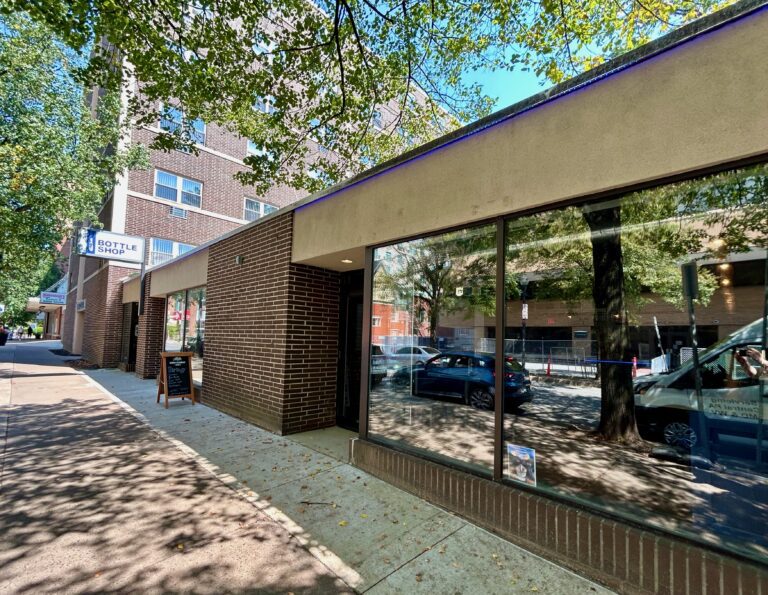
Bottle Shop Expands With New Blue & White Pub in Downtown State College
What began as a plan to purchase and renovate a longtime West Beaver Avenue bottle shop has grown into a new pub six years later.Stories You MissedNew Multi-Roaster Coffee Shop […]

E.F. ‘Pat’ Houser Golf Tournament Raises $62K for Skills of Central PA
The 21st Annual E.F. “Pat” Houser Golf Tournament, hosted by Skills of Central PA and the Skills Foundation, raised more than $62,000 on Aug. 24 at Toftrees Resort.Stories You MissedNew […]


